
The Method Behind the Meaning
Crafting Spatial and Digital Experiences
Posted
2023-10-01
2023-10-01
2023-10-01
Author
Amro Kabbara
Amro Kabbara
Amro Kabbara
Est Reading
4 to 5 minutes
4 to 5 minutes
4 to 5 minutes
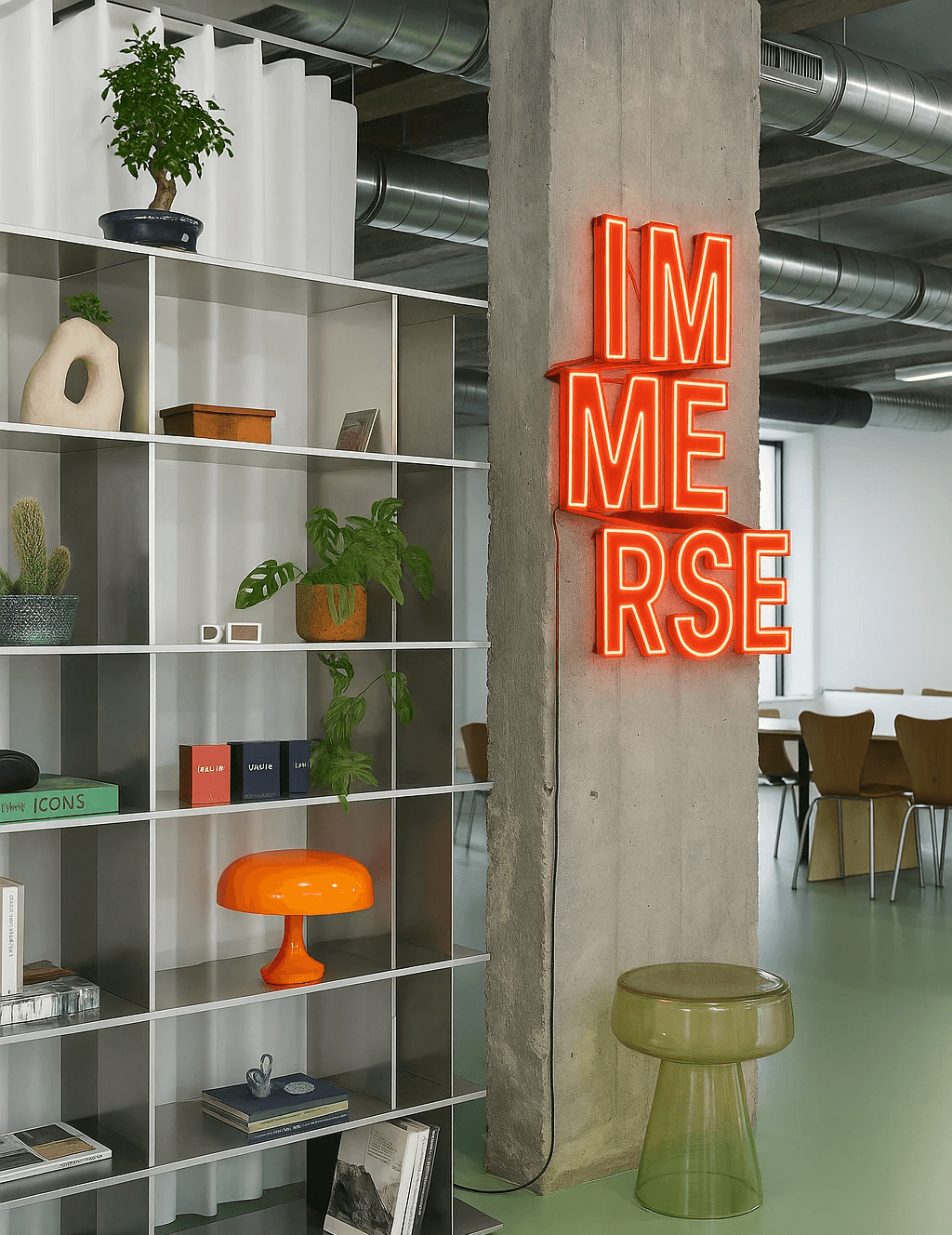
Design, at its core, is a conversation between intention and reality. Between what could be and what should be.
In a world where experiences now stretch across physical, digital, and emotional landscapes, designing meaningfully requires more than intuition or aesthetics. It requires a clear methodology; one that is curious enough to explore, disciplined enough to distill, and agile enough to adapt.
This isn’t about turning creativity into a checklist. It’s about giving ideas the structure they need to breathe, evolve, and land with impact.
A compelling environment today is rarely the result of one brilliant sketch. It’s the outcome of layered thinking; research, prototyping, iteration, and collective refinement, that transforms insight into atmosphere, and atmosphere into experience.
Start with People, Not Blueprints
Every space is used before it is built, at least in the imagination of those it intends to serve. That’s why any meaningful design process starts not with floor plans, but with people. Not with assumptions, but with questions.
What stories already live in the site? How do people interact with similar spaces? What triggers delight, confusion, or even friction in their daily patterns? These questions are not just philosophical, they’re practical. They guide everything from circulation to material choices to how long someone lingers before moving on.
Whether through immersive fieldwork, behavioral observation, user journey mapping, or cultural research, the aim is to understand the emotional and social context behind spatial behavior. Because when a space resonates with its users, it does more than function, it earns meaning.
And meaning, unlike metrics, tends to stick.
Use Technology Thoughtfully, Not Just Impressively
Emerging tools like XR, AI, and data-driven design are powerful, but only when used with purpose. Technology for its own sake is spectacle. Technology with strategy is transformation.
Today, simulations can reveal how people will navigate a building before it’s built. Generative tools can offer hundreds of layout iterations based on sun, flow, or even mood. XR can let users walk through a gallery, a hotel, or an office, long before there’s a single brick.
But the goal is never to overwhelm. The goal is to prototype emotion, test interaction, and fine-tune the user’s journey. Good tech doesn’t just impress the eye. It anticipates the body, the brain, and the feeling.
Collaborate Like You Mean It
Design isn’t a solo act. It’s a layered dialogue between ideas, disciplines, and people. Some of the most compelling environments today weren’t authored by a single hand, but shaped by collective insight.
Architects might lay the bones. Brand strategists might build the personality. Technologists might craft the interactions. But when all of it aligns, the result is something cohesive, not a Frankenstein of styles.
Whether it’s blending hospitality with health, or retail with ritual, or culture with code, the most resonant spaces today are multi-voiced and multidimensional. Collaboration is not a stage in the process. It is the process.
Conclusion
Design isn’t magic. It’s method with meaning.
The spaces that move people, the experiences that linger, and the environments that tell real stories, they rarely happen by accident. They’re built on insight, shaped through tools, and brought to life by collaboration that refuses to stay in its lane.
Because at the end of the day, the most powerful designs don’t just look good on paper. They feel right in the world.
Design, at its core, is a conversation between intention and reality. Between what could be and what should be.
In a world where experiences now stretch across physical, digital, and emotional landscapes, designing meaningfully requires more than intuition or aesthetics. It requires a clear methodology; one that is curious enough to explore, disciplined enough to distill, and agile enough to adapt.
This isn’t about turning creativity into a checklist. It’s about giving ideas the structure they need to breathe, evolve, and land with impact.
A compelling environment today is rarely the result of one brilliant sketch. It’s the outcome of layered thinking; research, prototyping, iteration, and collective refinement, that transforms insight into atmosphere, and atmosphere into experience.
Start with People, Not Blueprints
Every space is used before it is built, at least in the imagination of those it intends to serve. That’s why any meaningful design process starts not with floor plans, but with people. Not with assumptions, but with questions.
What stories already live in the site? How do people interact with similar spaces? What triggers delight, confusion, or even friction in their daily patterns? These questions are not just philosophical, they’re practical. They guide everything from circulation to material choices to how long someone lingers before moving on.
Whether through immersive fieldwork, behavioral observation, user journey mapping, or cultural research, the aim is to understand the emotional and social context behind spatial behavior. Because when a space resonates with its users, it does more than function, it earns meaning.
And meaning, unlike metrics, tends to stick.
Use Technology Thoughtfully, Not Just Impressively
Emerging tools like XR, AI, and data-driven design are powerful, but only when used with purpose. Technology for its own sake is spectacle. Technology with strategy is transformation.
Today, simulations can reveal how people will navigate a building before it’s built. Generative tools can offer hundreds of layout iterations based on sun, flow, or even mood. XR can let users walk through a gallery, a hotel, or an office, long before there’s a single brick.
But the goal is never to overwhelm. The goal is to prototype emotion, test interaction, and fine-tune the user’s journey. Good tech doesn’t just impress the eye. It anticipates the body, the brain, and the feeling.
Collaborate Like You Mean It
Design isn’t a solo act. It’s a layered dialogue between ideas, disciplines, and people. Some of the most compelling environments today weren’t authored by a single hand, but shaped by collective insight.
Architects might lay the bones. Brand strategists might build the personality. Technologists might craft the interactions. But when all of it aligns, the result is something cohesive, not a Frankenstein of styles.
Whether it’s blending hospitality with health, or retail with ritual, or culture with code, the most resonant spaces today are multi-voiced and multidimensional. Collaboration is not a stage in the process. It is the process.
Conclusion
Design isn’t magic. It’s method with meaning.
The spaces that move people, the experiences that linger, and the environments that tell real stories, they rarely happen by accident. They’re built on insight, shaped through tools, and brought to life by collaboration that refuses to stay in its lane.
Because at the end of the day, the most powerful designs don’t just look good on paper. They feel right in the world.